
Sex Trafficking Lawyer Augusta, GA
If you survived sex trafficking in Augusta, you’re dealing with trauma that most people will never understand, and our attorneys are here to help you fight for the justice and compensation that you deserve.
Our Augusta, GA sex trafficking lawyer at Deitch + Rogers brings civil claims against traffickers, hotels, property owners, and businesses that participated in or enabled human trafficking. Criminal prosecution punishes offenders. Civil litigation compensates you and holds accountable every person and business that profited from your exploitation. Consultations are confidential, and you pay nothing unless we recover compensation for you.
Why Choose Deitch + Rogers for Sex Trafficking Cases in Augusta, GA?
Attorneys Who Understand Trafficking Survivor Needs
Sex trafficking survivors face legal challenges most attorneys have never encountered. Many survivors were manipulated into situations where they felt complicit. Some carry criminal records from activities their traffickers forced them to perform. Others fear retaliation or distrust anyone in authority.
Our firm has recovered more than $200 million for victims across Georgia. Results include a $60 million verdict in a sexual assault and institutional negligence case, $15 million for an apartment complex sexual assault victim, $9.2 million in another institutional negligence matter, and multiple recoveries over $1 million for survivors of sexual violence. We identify all responsible parties and pursue every available legal theory.
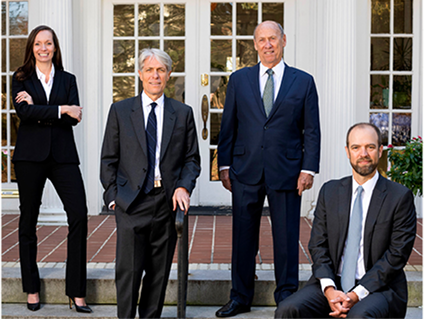
Gilbert Deitch founded the firm in 1970 after earning his J.D. from the University of Tennessee College of Law. His practice has centered on representing crime victims in civil actions for more than fifty years. Gilbert has written on premises liability for TRIAL Magazine, Verdict Magazine, the Georgia State Bar Journal, and Crime Victims’ Litigation Quarterly. NBC Nightly News, 20/20, and Atlanta-area television stations have featured his advocacy. He is admitted to all Georgia courts, the U.S. District Court for the Northern District of Georgia, and Tennessee courts. He belongs to the Georgia Trial Lawyers Association.
Andrew Rogers co-founded the firm after graduating from Georgia State University College of Law in 1988. He studied undergraduate at the University of Georgia. Andrew helped establish the National Crime Victim Bar Association as a charter member and has been recognized by Super Lawyers. He practices before all Georgia courts and the U.S. District Court for the Northern District of Georgia.
Michael D’Antignac is a partner who earned his J.D. from the University of Georgia School of Law in 2001 after studying Philosophy at the College of Charleston. Michael is admitted to all Georgia courts, the U.S. District Court for the Northern District of Georgia, the U.S. District Court for the Northern District of Florida, and the U.S. Court of Appeals for the Eleventh Circuit. He served on the Board of Directors for the Atlanta Bar Association and belongs to the Georgia Trial Lawyers Association, National Crime Victim Bar Association, and American Association for Justice.
If you need a crime victim lawyer in Augusta, our firm brings this concentrated experience to your case.
Multiple Defendants Create Multiple Recovery Sources
Traffickers rarely act alone. Hotels look the other way. Landlords rent to known trafficking operations. Websites connect buyers with victims. Businesses launder trafficking proceeds. Each entity that participated in or enabled your exploitation may face civil liability.
The Trafficking Victims Protection Act allows survivors to sue traffickers and anyone who knowingly benefited from trafficking ventures. State law claims for assault, battery, false imprisonment, and intentional infliction of emotional distress expand potential recovery further.
Contingency Representation
We advance all costs for investigation, consultants, and litigation. You pay nothing during the case. Our fee comes only from what we recover for you. No recovery means you owe nothing.
⭐⭐⭐⭐⭐
“We’ve had two occasions in the past twenty years to use the legal services of Mr. Andrew Rogers. In both instances his expert legal advice and guidance lead us through dark and stressful days to relief and resolution. He patiently listened to us and then exhaustively advocated for our interests using every legal means necessary. He is an excellent communicator and we were routinely updated on the status of our cases. If you are a victim, Andrew Rogers is the attorney you need.” — Kitty MacFarlane
Read more reviews on our Google Business Profile.
Types of Sex Trafficking Cases We Handle in Augusta

Human trafficking takes many forms. Our Augusta sex trafficking attorneys pursue civil claims against everyone who participated in or profited from a survivor’s exploitation.
- Commercial sex trafficking. Victims forced into prostitution, escort services, or pornography through violence, threats, manipulation, or addiction. Civil claims target traffickers plus hotels, landlords, and businesses that knowingly facilitated operations.
- Hotel and motel trafficking. Hospitality properties along I-20 see significant trafficking activity. When hotels ignore obvious signs of trafficking, survivors can pursue civil claims. Management that looks the other way to protect revenue faces serious liability.
- Massage parlor trafficking. Illicit massage businesses often front for sex trafficking operations. Workers may be debt-bonded, threatened, or physically controlled. Property owners who lease to these operations without investigating suspicious activity may share liability.
- Online-facilitated trafficking. Websites and apps connecting buyers with trafficking victims face federal liability under FOSTA-SESTA amendments to the Communications Decency Act. Platforms that knowingly facilitate trafficking can be sued.
- Gang-controlled trafficking. Criminal organizations control some trafficking networks. While gang members may lack assets, businesses that served as venues or laundered proceeds often have resources to compensate survivors.
- Domestic minor sex trafficking. When children are trafficked, liability extends to anyone who should have recognized signs of exploitation. Hotels renting rooms to adults with minors exhibiting trafficking indicators face significant exposure.
Georgia Legal Requirements for Sex Trafficking Cases
Federal and state laws provide powerful tools for trafficking survivors pursuing civil claims.
Federal Trafficking Victims Protection Act
The Trafficking Victims Protection Act, codified at 18 U.S.C. § 1595, creates a private right of action for trafficking survivors. Victims can sue anyone who knowingly benefited financially from a trafficking venture, even if that party didn’t directly participate in trafficking.
This provision reaches hotels, landlords, and businesses that turned a blind eye to trafficking on their premises. If they knew or should have known trafficking was occurring and continued collecting rent or room charges, they face liability under federal law.
Georgia Human Trafficking Statutes
Georgia has enacted strong anti-trafficking legislation. Under O.C.G.A. § 16-5-46, trafficking in persons for sexual servitude is a serious felony. Georgia law also provides for asset forfeiture and restitution to victims.
Civil claims under Georgia law supplement federal remedies. Survivors can bring state law claims for assault, battery, false imprisonment, and intentional infliction of emotional distress against traffickers and facilitators.
Statute of Limitations
The federal TVPA allows claims within 10 years of the trafficking violation or, for minors, within 10 years of turning 18. Georgia state law claims generally require filing within two years under O.C.G.A. § 9-3-33, though exceptions may apply.
What Damages Are Recoverable in Augusta Sex Trafficking Cases?
Civil litigation can provide substantial compensation for trafficking survivors.
Economic Damages
Economic damages are tangible losses like medical and mental health treatment costs, and expenses for rebuilding your life after escape. All documented economic losses are recoverable.
Medical Expenses
Physical injuries from violence including sexually transmitted infections, pregnancy-related care, and substance abuse treatment resulting from trafficking. All past and future medical costs connected to your trafficking are recoverable, including
Mental Health Treatment
Survivors typically need extensive psychological support, like individual therapy, group therapy, psychiatric care, medication management. Treatment may continue for years. All reasonable mental health costs can be recovered.
Pain and Suffering
Physical pain from assaults, rapes, and other violence. Emotional anguish from exploitation and degradation. Georgia law recognizes that trafficking causes profound suffering deserving substantial compensation.
Punitive Damages
Trafficking involves extreme wrongdoing that often warrants punitive damages. Under O.C.G.A. § 51-12-5.1, Georgia permits punitive damages for willful misconduct. While generally capped at $250,000, exceptions exist for intentional torts like those involved in trafficking.
What Steps Should I Take After Escaping Sex Trafficking?
Leaving a trafficking situation takes tremendous courage. These steps may help protect your safety and preserve legal options.
- Get somewhere safe. Your physical safety comes first. If you need immediate help, call the National Human Trafficking Hotline at 1-888-373-7888.
- Seek medical care. Address immediate health needs. Medical records document injuries connected to trafficking.
- Consider reporting to law enforcement. This is your choice. Some survivors want criminal prosecution. Others don’t feel safe involving police. Civil claims don’t require criminal reports.
- Connect with victim services. Organizations specializing in trafficking survivor support help with housing, counseling, and job training. The Georgia Criminal Justice Coordinating Council administers victim compensation funds for immediate expenses.
- Find mental health support. Trauma therapy helps many survivors. Look for therapists with trafficking or complex trauma experience.
- Document what you remember. When able, write down locations, people involved, businesses that facilitated trafficking, and dates. This information aids investigation.
- Preserve evidence. If you have documents, photographs, communications, or other materials from trafficking, keep them safe.
- Avoid contact with traffickers. They may try to pull you back. Block numbers, change addresses if possible, tell trusted people about safety concerns.
- Understand this wasn’t your fault. Trafficking victims are manipulated and coerced. What happened to you was not your fault.
- Talk to a sex trafficking attorney when ready. Some survivors pursue legal action immediately. Others need years. We’re here whenever you decide to explore options.
Sex Trafficking Statistics in Augusta

The scope of human trafficking underscores why survivor advocacy matters.
According to the National Human Trafficking Hotline operated by Polaris Project, thousands of potential trafficking situations are reported annually in the United States. Georgia consistently ranks among states with the highest reported cases.
The U.S. Department of Justice prosecutes hundreds of trafficking cases each year, though these represent only a fraction of actual trafficking crimes. Most trafficking goes unreported.
Research from the International Labour Organization estimates millions of people worldwide are trapped in forced sexual exploitation at any given time. The vast majority are women and girls.
Augusta’s location along Interstate 20 creates trafficking vulnerabilities. Major highways facilitate movement of victims between cities. The Georgia Bureau of Investigation has identified the I-20 corridor as a significant trafficking route.
Hotels, motels, and truck stops along these routes see trafficking activity. When businesses fail to train employees to recognize trafficking signs or deliberately ignore indicators, they enable continued exploitation.
Augusta Sex Trafficking Lawyer FAQs
Can I sue if I was never physically restrained?
Yes. Trafficking often involves psychological coercion rather than physical chains. Debt bondage, threats against family members, manipulation of immigration status, and exploitation of addiction all constitute trafficking.
What if I have a criminal record from things my trafficker made me do?
Your criminal record doesn’t prevent civil claims. Georgia’s vacatur law may allow clearing trafficking-related convictions. Crimes you were forced to commit don’t change your victim status.
Can I sue the hotel where trafficking occurred?
Potentially. If the hotel knew or should have known trafficking was happening and failed to act, they face liability under federal law.
What about websites that connected buyers to my trafficker?
FOSTA-SESTA amendments allow civil claims against websites that knowingly facilitate trafficking.
How long do I have to file a lawsuit?
Federal law allows claims within 10 years. Georgia state law claims generally require filing within two years, though exceptions may apply. Talk to an attorney about your specific situation.
Will I have to testify publicly about what happened?
Many cases settle before trial. If trial becomes necessary, we work to protect your privacy. Some survivors proceed anonymously using pseudonyms.
What if my trafficker has no money?
Individual traffickers often lack assets. But hotels, property owners, and businesses typically have insurance and resources. We identify all parties who profited from your exploitation.
Can family members sue for what they went through?
Family members may have claims for loss of consortium or emotional distress in some circumstances.
What if I’m undocumented?
Immigration status doesn’t prevent civil claims. Federal law provides visa protections for trafficking survivors who cooperate with law enforcement.
Will my trafficker find out I’m suing?
Defendants eventually receive notice of lawsuits. We take safety seriously and can discuss protective measures.
Do I have to talk to the police to file a civil lawsuit?
No. Civil claims are completely separate from criminal prosecution.
How much could my case be worth?
Value depends on duration and severity of trafficking, injuries, psychological harm, and available insurance or assets. Cases involving extended trafficking and multiple defendants can result in substantial recoveries.
What if I was trafficked in multiple states?
Federal law applies regardless of where trafficking occurred. We pursue claims related to trafficking that crossed state lines.
Can I trust you with what happened to me?
Trust takes time. Initial consultations are confidential, and we won’t pressure you to share more than you’re comfortable discussing.
Do I need an attorney who handles trafficking cases specifically?
Sex trafficking claims involve specialized federal law, complex multi-defendant litigation, and sensitivity to survivor trauma. Choose attorneys who concentrate on representing crime victims.
Most Dangerous Locations for Sex Trafficking in Augusta

Understanding where trafficking happens illustrates why businesses face liability for enabling exploitation.
Hotels and motels along I-20 and I-520 see significant trafficking activity. Properties near highway interchanges present particular risks. Management ignoring signs of trafficking in their rooms bears responsibility.
Massage parlors operating as fronts exist throughout the Augusta area. Landlords leasing commercial space without investigating suspicious activity may face liability.
Truck stops and rest areas serve as connection points for trafficking networks. Businesses at these locations have heightened responsibilities.
Private residences can serve as trafficking venues. Landlords renting to known trafficking operations or ignoring obvious signs of commercial sex activity may be liable.
Strip clubs and adult entertainment venues sometimes involve trafficking. Coerced performers and debt-bonded workers may have claims against club owners.
What Are Important Local Resources for Augusta Sex Trafficking Survivors?
The following resources may help trafficking survivors in Augusta. We do not endorse these organizations and provide this information for reference only.
National Human Trafficking Hotline – 1-888-373-7888. 24/7 confidential support and referrals nationwide.
Augusta University Medical Center – 706-721-2273. Regional medical center providing emergency and ongoing care.
Richmond County Sheriff’s Office – 706-821-1020. Local law enforcement for Augusta-Richmond County.
Georgia Bureau of Investigation – State agency investigating human trafficking cases.
Georgia Crime Victims Compensation – 404-657-2222. Financial assistance for medical bills and counseling.
Georgia Asylum and Immigration Network – Legal assistance for immigrant trafficking survivors.
SafeHomes of Augusta – 706-736-2499. Domestic violence shelter that may assist trafficking survivors.
Contact Deitch + Rogers
What happened to you was not your fault. Traffickers manipulate and exploit. The businesses that enabled your trafficking chose profit over your safety.
Our Augusta sex trafficking attorneys offer confidential consultations. No pressure. No judgment. We listen to what you’re comfortable sharing and help you understand what legal action might look like.
We work on contingency and don’t charge legal fees unless we recover compensation for you. Legal action can provide resources for recovery and accountability for everyone who participated in your exploitation.
Contact Deitch + Rogers today. You’ve shown incredible strength by surviving. We’re here to help you fight back.
 (770) 588-0400
  1189 South Ponce de Leon Ave., NE, Atlanta, Georgia 30306